
Wasp Nest Removal Melbourne | 24/7 Service
European wasps in a wall, a papery nest under the eaves or a hole in the lawn humming with traffic? We find the nest, treat the colony safely and back the work for six months.
A Clear First Step
You do not need to identify the wasp yourself. Describe where you are seeing them and our team will call to discuss the next step.
Request Your Quote
Complete the form and our Melbourne team will contact you shortly.
Treating The Colony, Not The Symptom
Spraying the wasps you can see achieves almost nothing — the queen and the brood are inside the nest, and the colony simply replaces the workers you killed.
We trace the flight path back to the nest, confirm the species, then treat at the entrance so returning foragers carry the product through the whole colony.
Wasp Control Services in Melbourne
Choose the closest match. If you are not sure what you have, describe the nest and where it is when you call and we will identify it before anything is booked.
01Wasp Nest Removal
Nests located, treated at the source and removed where safe — not just sprayed from a distance.
 02
02European Wasp Control
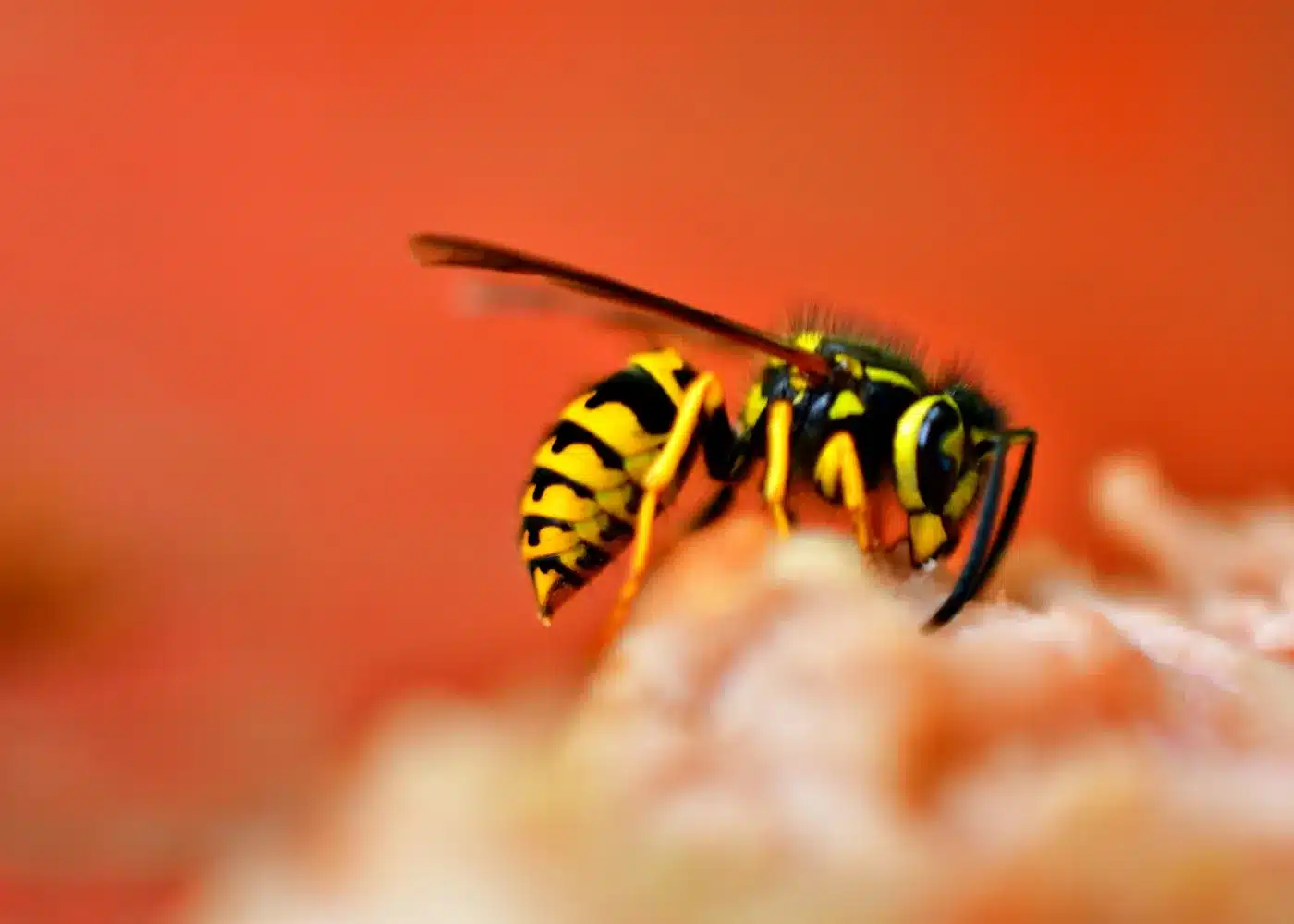
The aggressive introduced species behind most Melbourne callouts, treated properly at the nest entrance.
 03
03Commercial Wasp Control
Out-of-hours treatment, safe exclusion zones, written documentation and seasonal monitoring.
Honest Pricing, Confirmed in Writing
Melbourne wasp treatments typically run $150 to $500 depending on the nest. Ours start lower — and every job gets a clear written quote before any treatment.
Standard Nest
Accessible nest under an eave, in a shrub or on a wall, single storey.
- Species identification on arrival
- Nest located and treated at source
- Safe exclusion zone while we work
- Nest removed where safely accessible
- 6-month nest warranty
Difficult Access
Wall cavity, roof void, underground colony or work at height.
- Everything in Standard Nest
- Cavity or underground colony treatment
- Ladder or height access where safe
- Entry point dusted and monitored
- Follow-up check included
- 6-month nest warranty
Commercial
Cafes, schools, childcare, warehouses and body corporates.
- Full site sweep for active nests
- Out-of-hours treatment where needed
- Written report for your records
- Seasonal monitoring available
- 6-month nest warranty
All prices are backed by our 5% price-beat promise. Nest size, height, access and colony type are confirmed before the quote is agreed.
Why Melbourne Calls Us
A hardware-store spray usually angers a European wasp nest without reaching the queen. We treat the colony properly, in protective gear, with the area kept safe while we work.
Every Wasp You Are Likely To Meet In Melbourne
Species changes everything — where the nest will be, how dangerous the job is, and whether treatment is even the right answer. Several of these need no treatment at all, and we will tell you when that is the case.
European Wasp
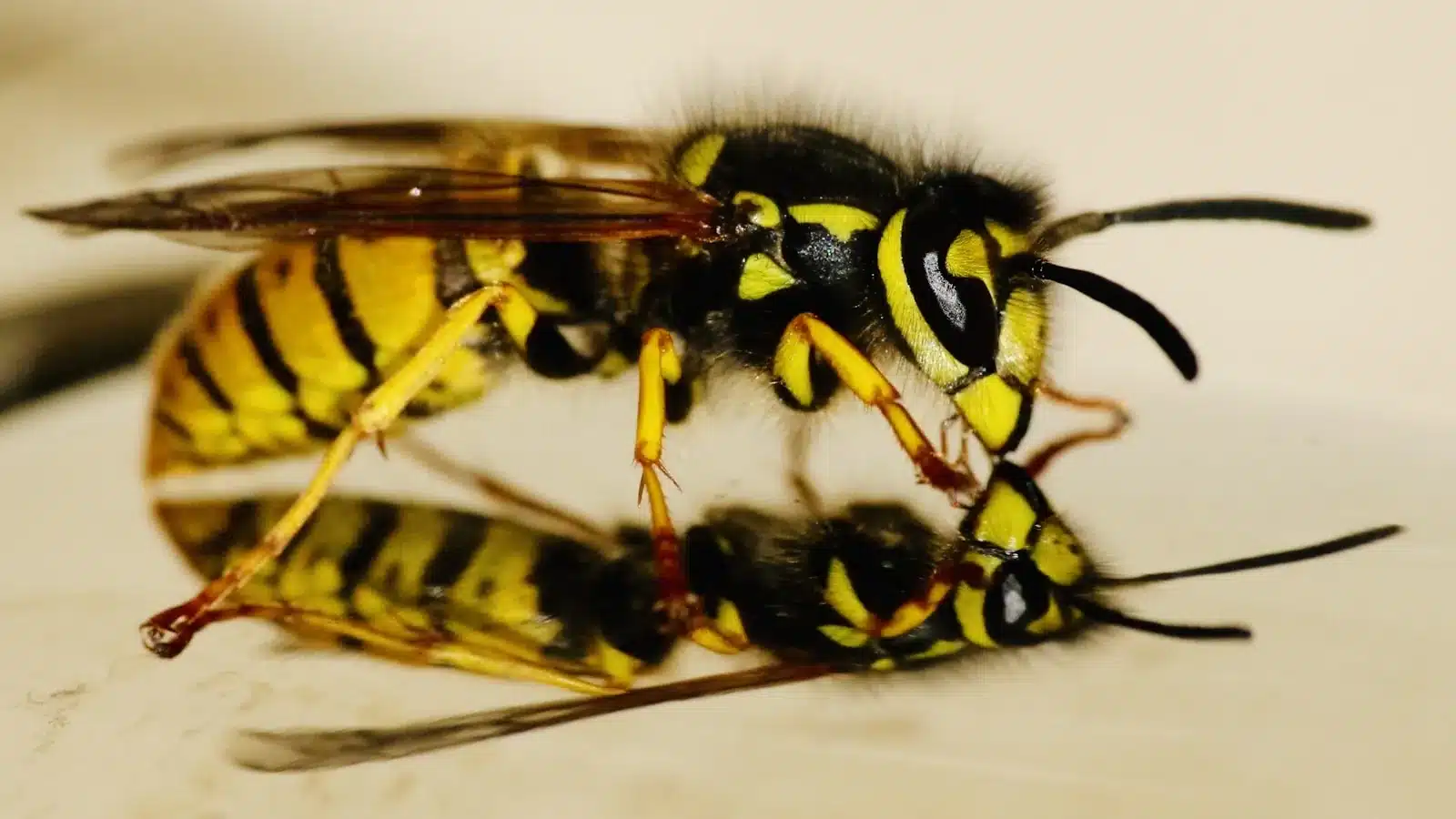
The species behind most Melbourne callouts. Bright yellow with black bands, black antennae and paired black spots down the abdomen. Colonies reach thousands by autumn and defend the nest aggressively, chasing a perceived threat well away from it.
High risk · Aggressive
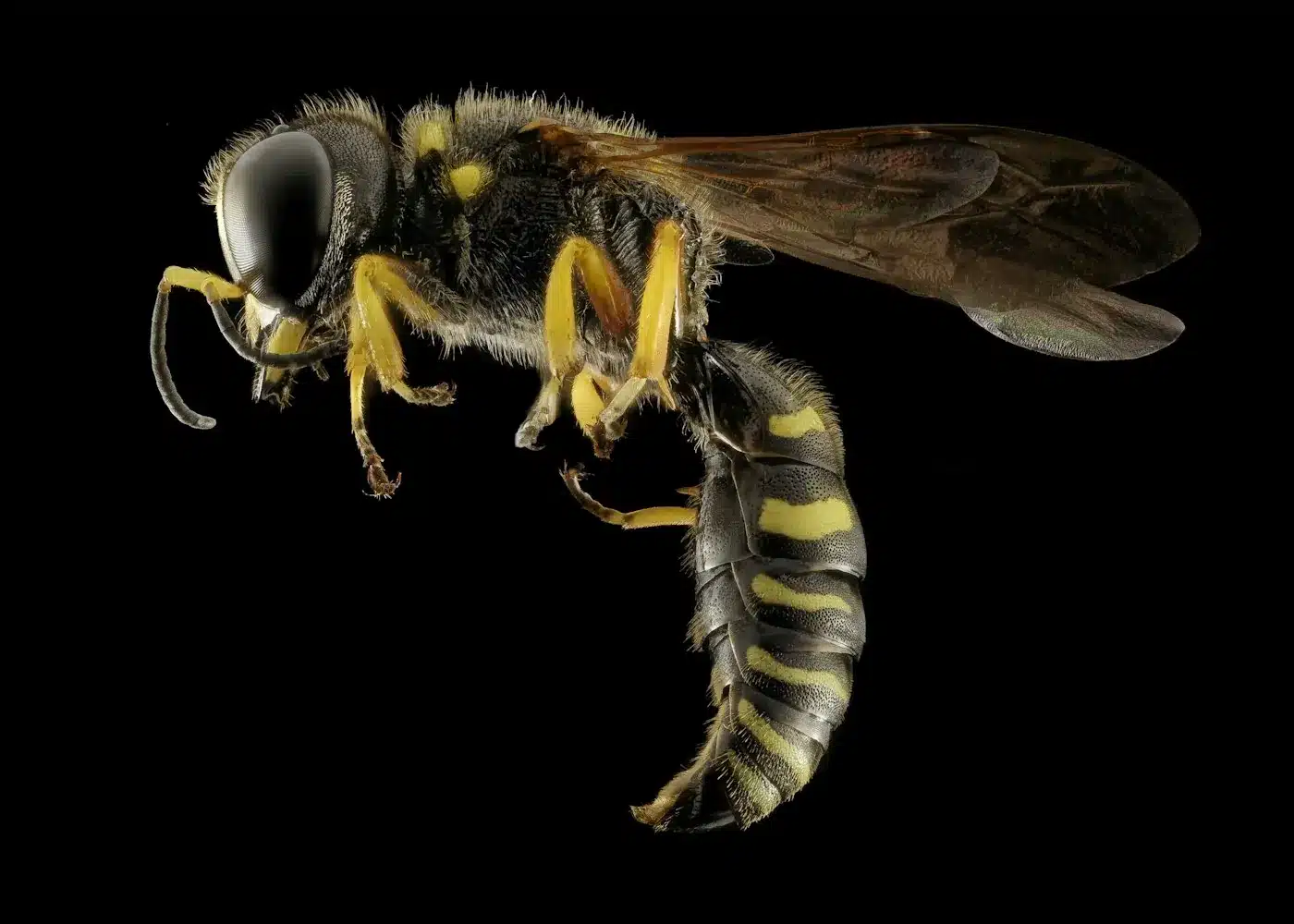
English / Common Wasp
Very close in looks and behaviour to the European wasp, with a slightly different facial marking. Also nests in cavities and underground, and is treated the same way. Most people cannot tell the two apart — you do not need to.
High risk · Aggressive
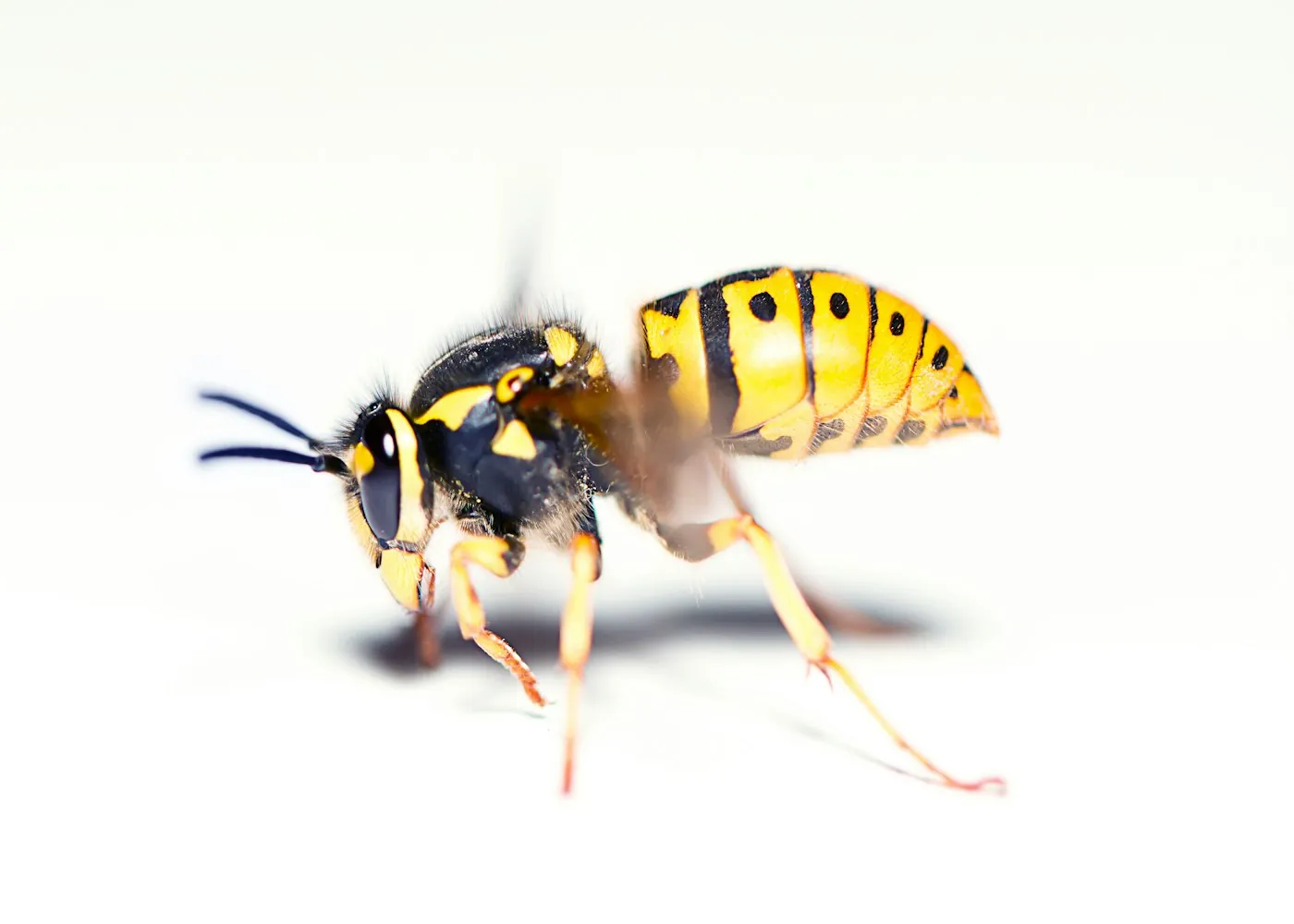
European Paper Wasp
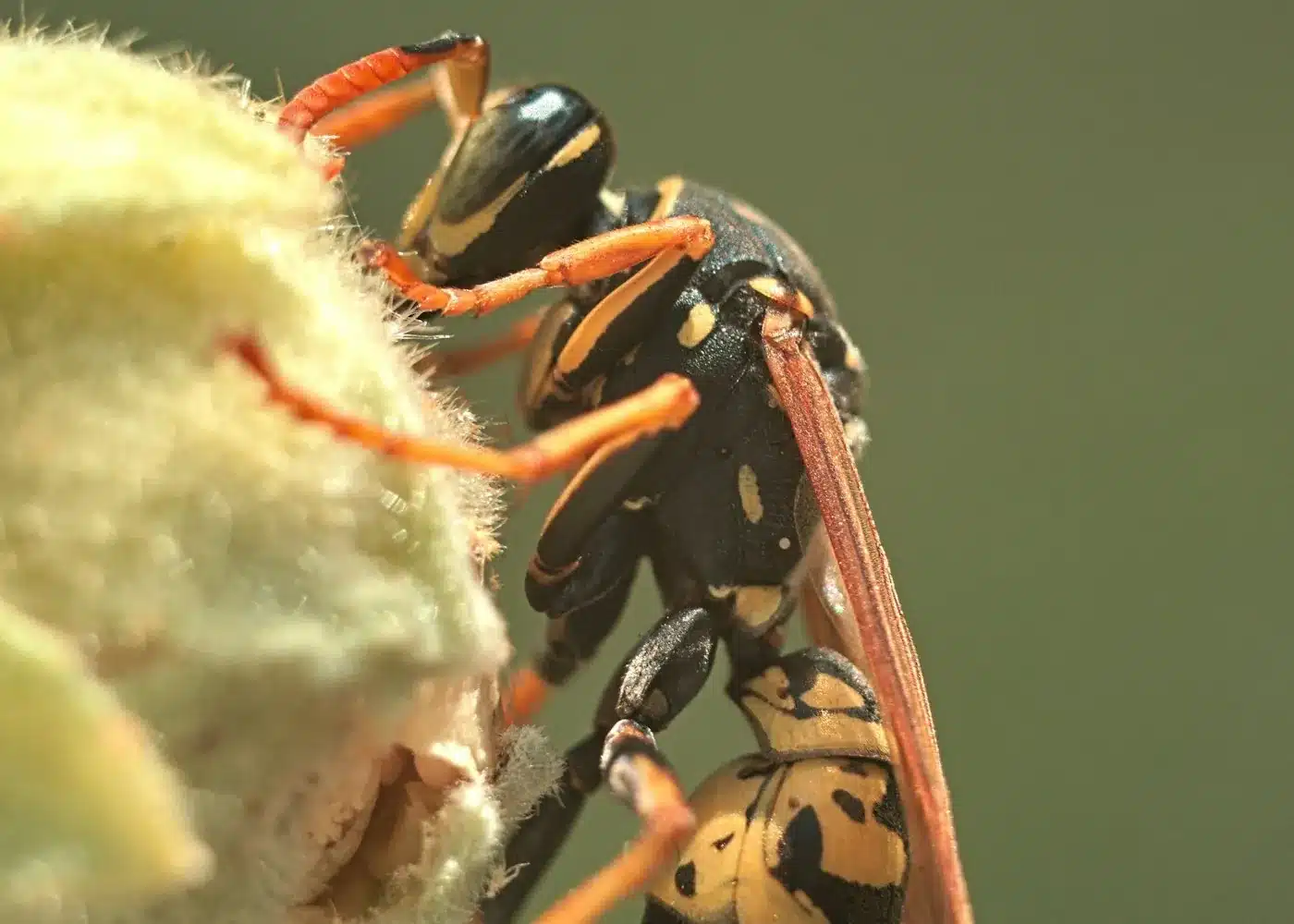
An introduced paper wasp now well established across Victoria. Yellow and black like a European wasp but slimmer, with orange antennae and legs that trail in flight. Builds open combs in sheltered spots.
Moderate · Defends nest
Australian Paper Wasp
A slender native paper wasp with tan to orange-brown colouring. Hangs a small open comb under eaves and in shrubs. Not naturally aggressive, but it will sting if the nest is disturbed by a mower, hedger or door.
Moderate · Native species
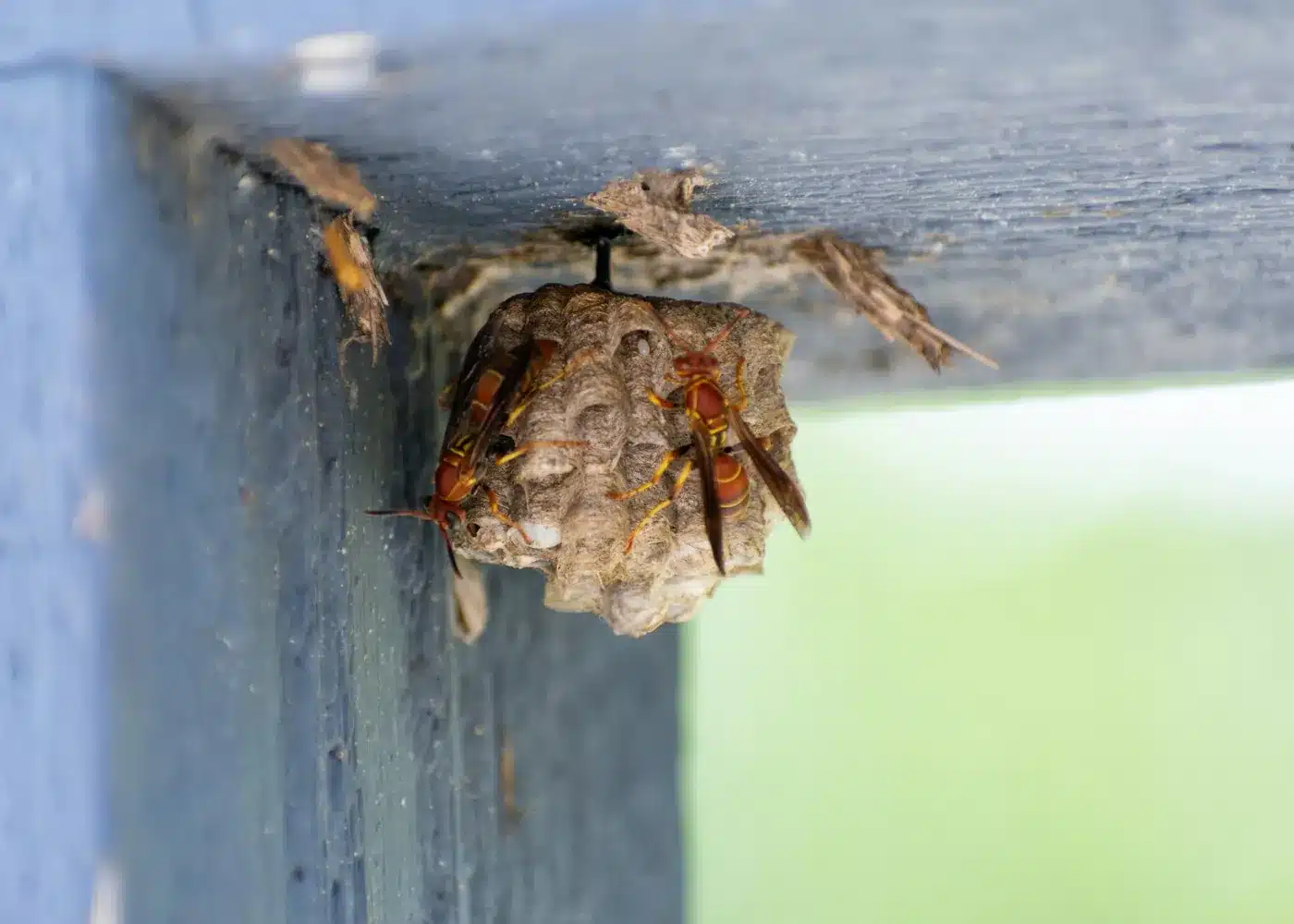
Brown Paper Wasps
Includes the white-faced brown paper wasp and the tree brown paper wasp. Reddish brown with pale rings or yellow markings, building small combs or elongated nests in sheltered outdoor spots.
Moderate · Defends nest
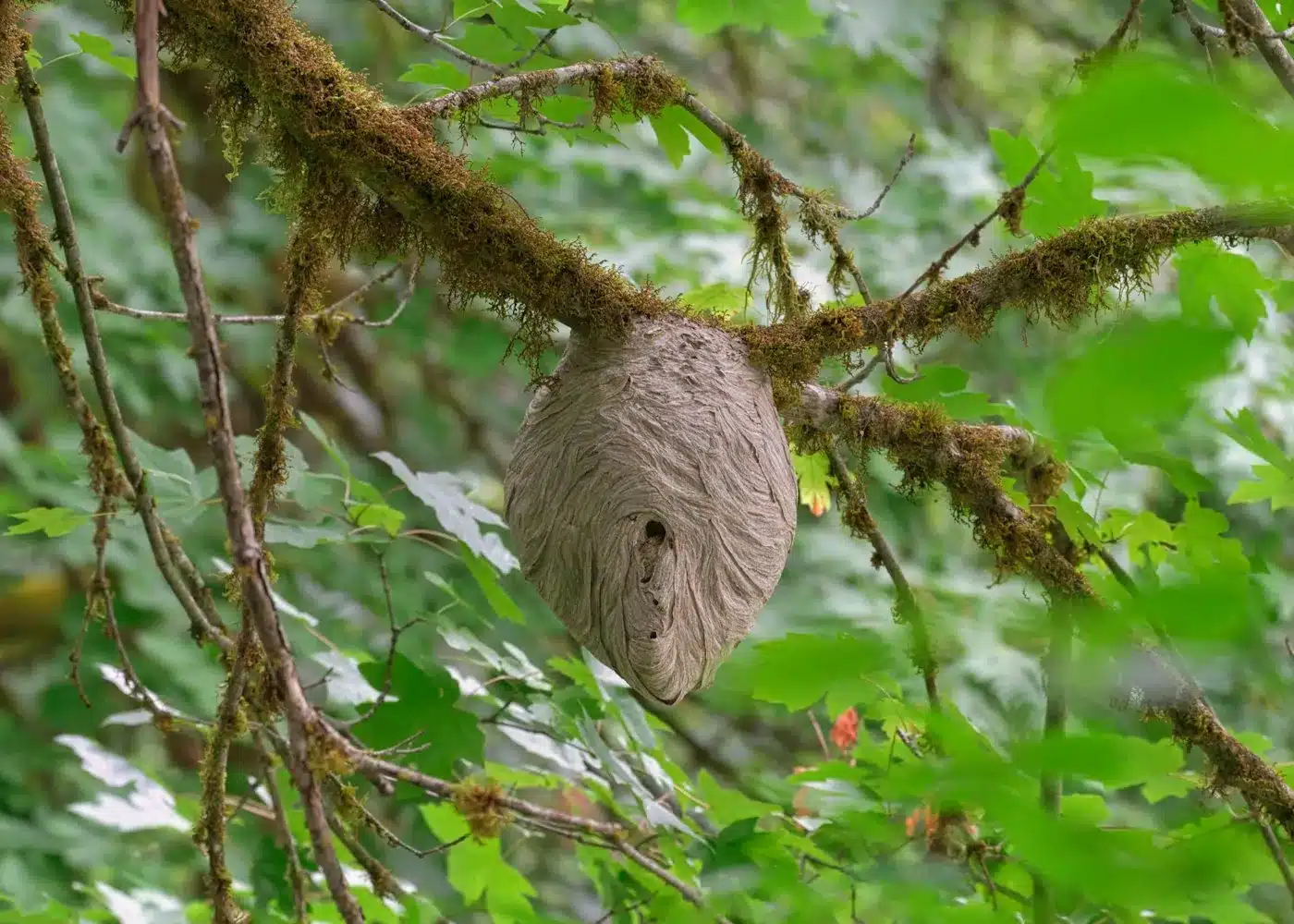
Paper Nests: What To Look For
The open, grey, upside-down umbrella of cells on a short stalk is the classic paper wasp signature. If the nest is enclosed in a papery envelope, or you cannot see it at all and wasps disappear into a gap, you are more likely dealing with a European wasp colony.
Moderate · Identify first
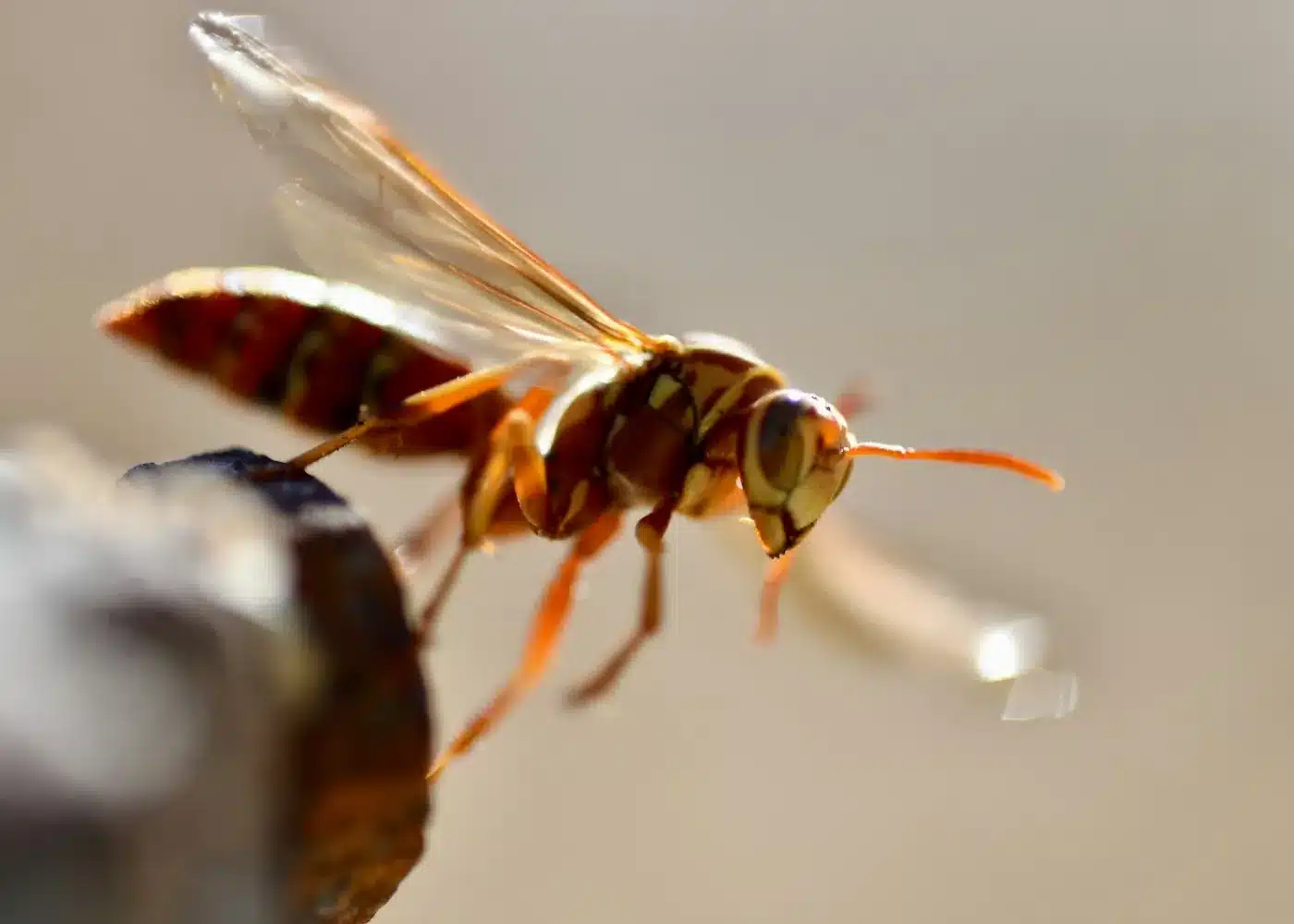
Mud Dauber / Mud Wasp
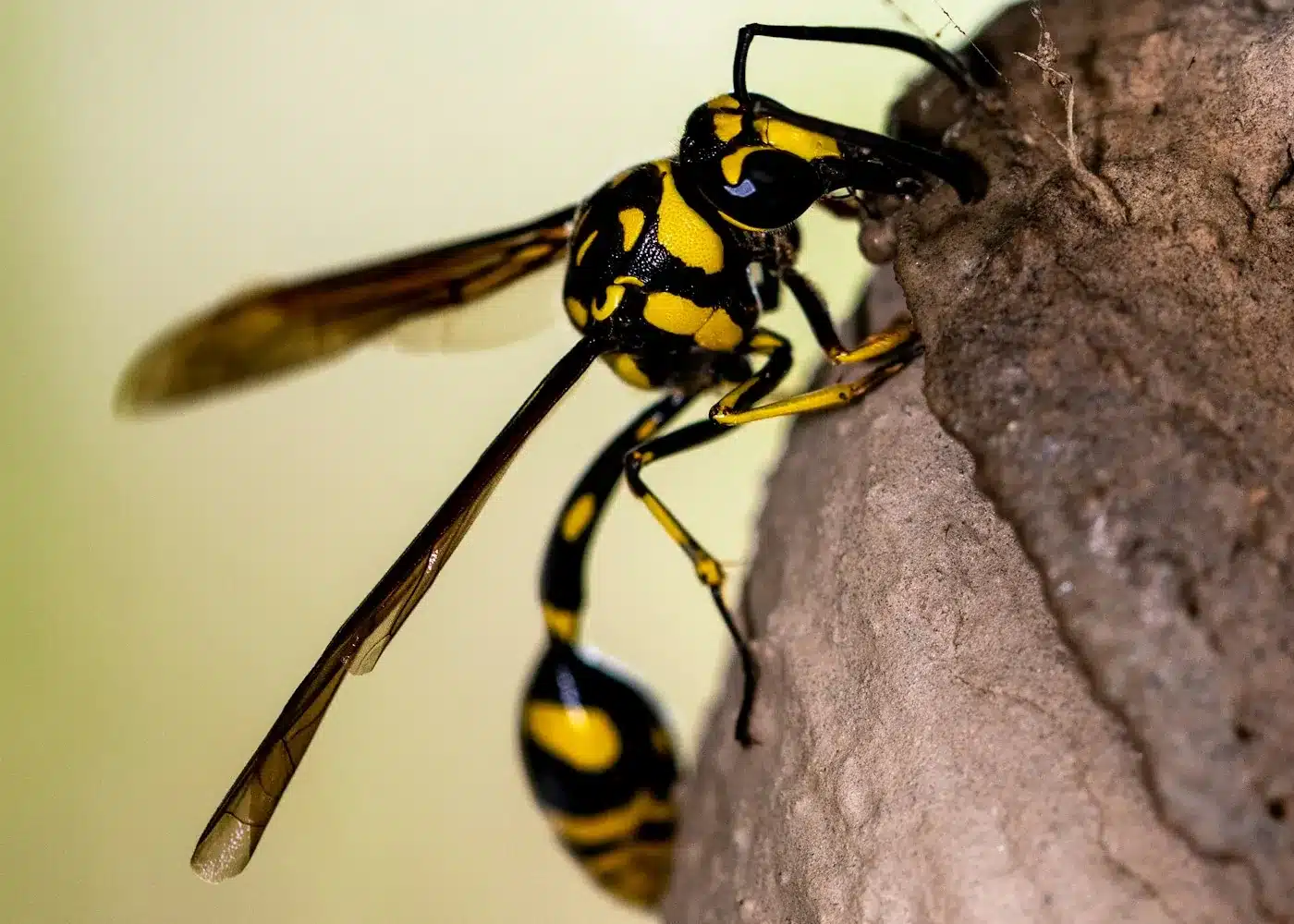
Solitary and slender with a long thread-like waist, usually black or black and orange. Builds the cylindrical mud tubes you find on brick walls, sheds and under pergolas. No colony to defend, so it is essentially harmless.
Low risk · Rarely aggressive
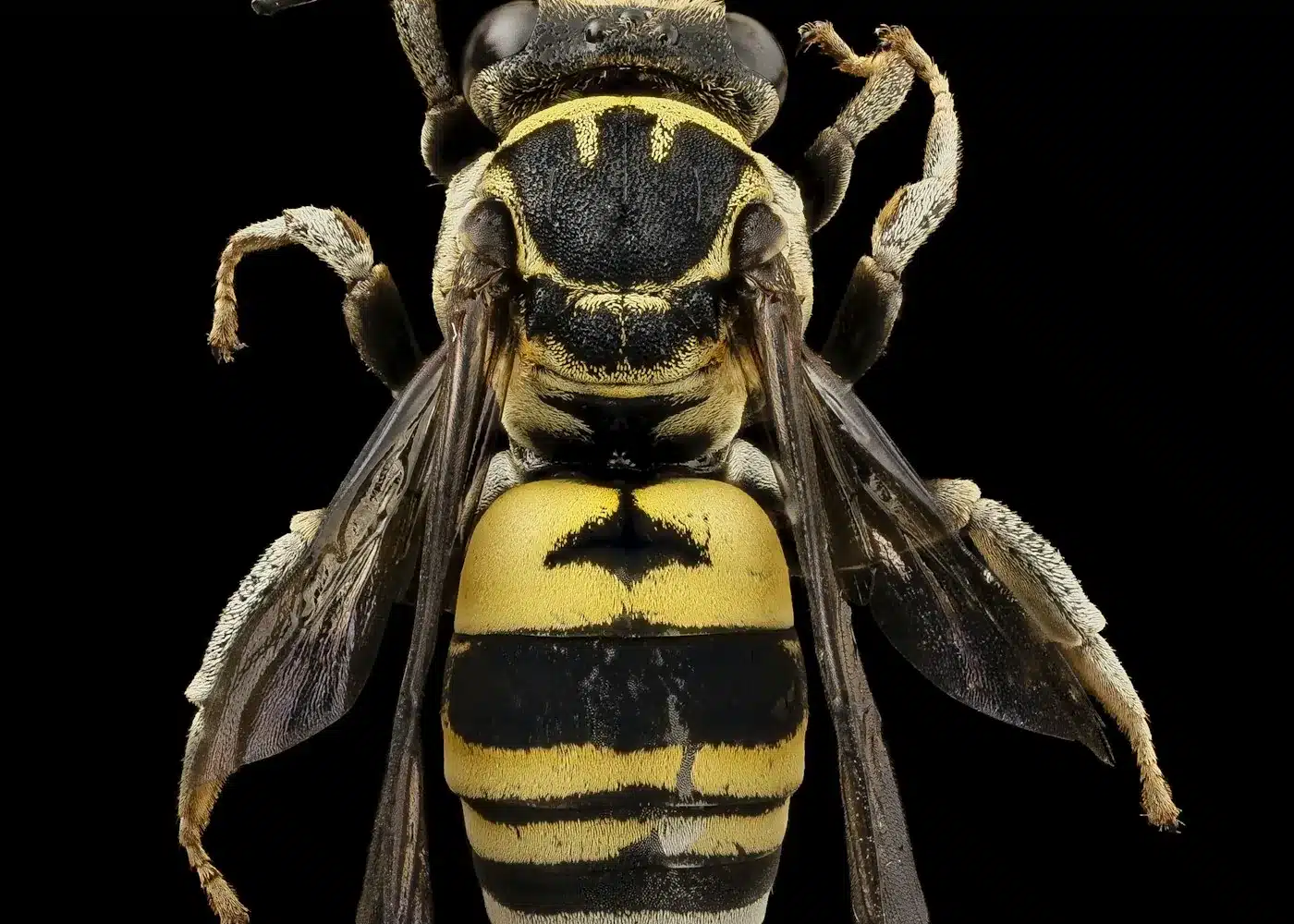
Potter Wasp
Solitary wasps that build small pot- or jug-shaped mud cells, often tucked under ledges and in mud-brick. Orange and black banded species are common. Rarely a problem unless the nest is somewhere inconvenient.
Low risk · Solitary
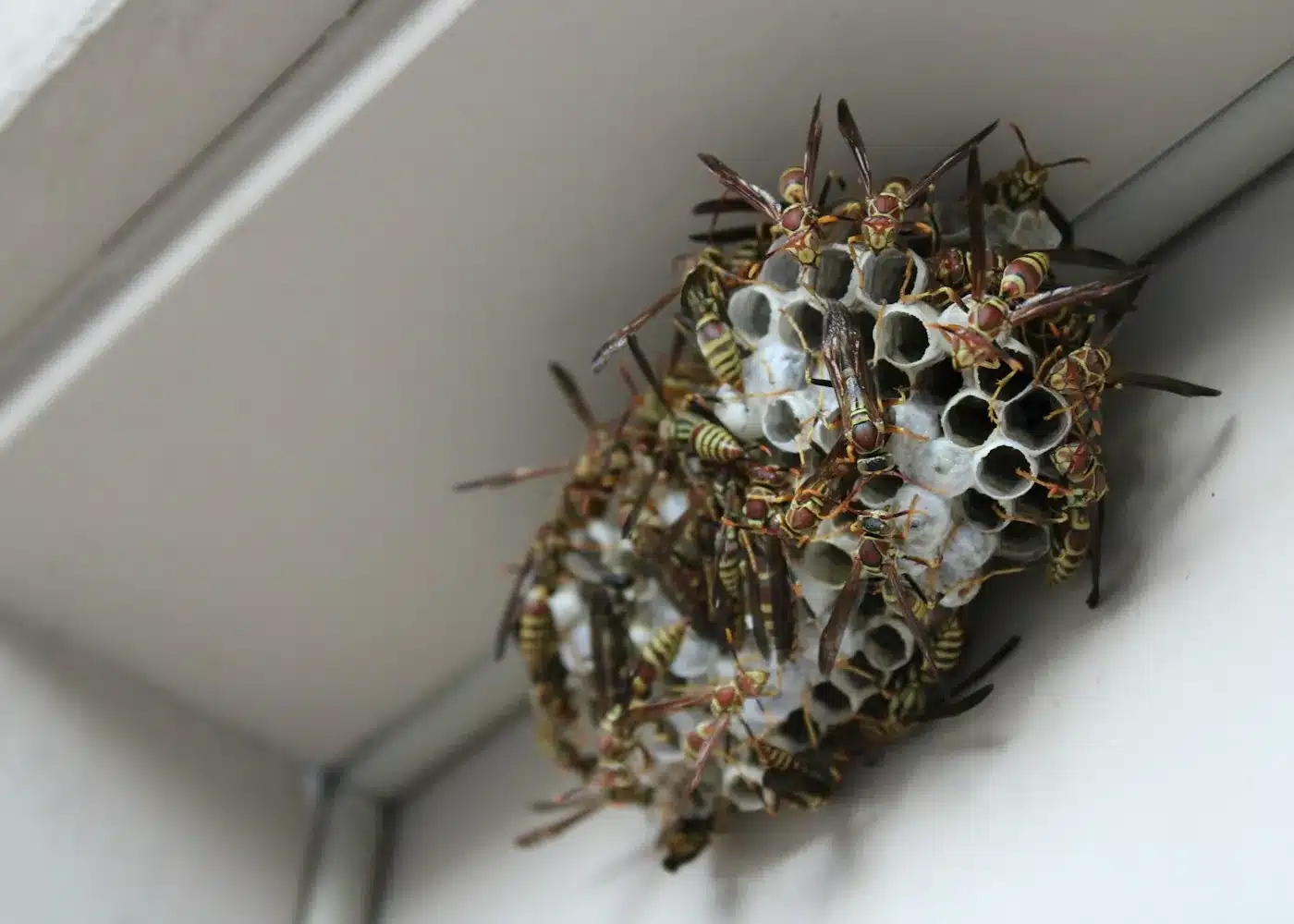
Spider Wasp
Long-legged, fast-moving and usually black with orange markings. Hunts spiders to provision a burrow rather than defending a colony. The sting is painful but these wasps are not looking for trouble with people.
Low risk · Solitary
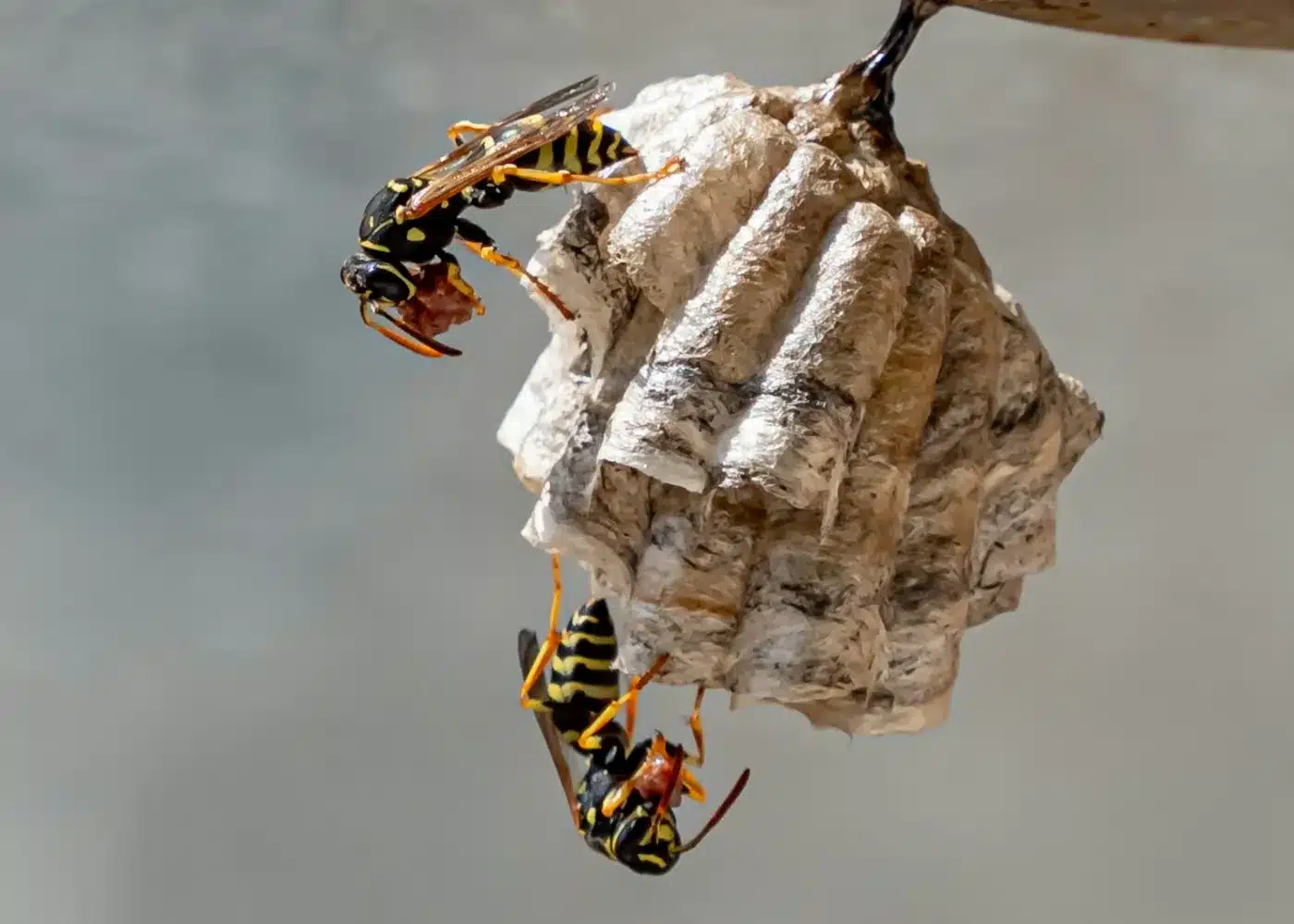
Sand Wasp
Black with yellow, white or pale-green banding, nesting in burrows in sand and loose soil. Often seen darting low over lawns and bare patches. Solitary and non-aggressive, though numbers can look alarming.
Low risk · Solitary
Yellow Jackets & “Hornets”
In Australia, “yellow jacket” almost always means the European wasp, and true hornets are not established here. If someone tells you they have hornets in Melbourne, it is nearly always a large European wasp or a paper wasp — we will confirm which before treating.
High risk · Usually European wasp
If it turns out to be bees, we will not kill them
Honey bees are pollinators and deserve relocation, not poison. If your swarm or nest is bees rather than wasps, we will tell you and point you to a local beekeeper or swarm collector instead — and you will not be charged for a treatment you did not need.
Where Nests Hide and What You Notice
These clues help us narrow down the search before a technician arrives.
Common Nest Locations
- Ground holes in lawns, garden beds and embankments
- Wall cavities entered through a weep hole or vent
- Roof voids and gaps behind fascia or barge boards
- Under eaves, pergolas, decking and window frames
- Inside sheds, meter boxes and unused barbecues
- Compost bins, wood piles and dense shrubs
Signs of an Active Nest
- A steady stream of wasps to one point on the building
- Wasps around bins, pet bowls or outdoor eating areas
- A grey papery comb, or rasping sounds inside a wall
- Wasps indoors repeatedly at the same window
- Sudden aggression when mowing or gardening
- Activity climbing sharply through February and March
Note where they enter and roughly how often.
Photograph it from a safe distance — do not approach.
That is usually chewing — the nest is in the cavity.
The Real Cost of Waiting
A wasp nest is not a problem that settles by itself. Every week it stays, these risks build.
Painful, Repeat Stings
Unlike bees, a wasp can sting again and again. A disturbed nest can send hundreds of defensive workers out at once, and stings around the face or throat are a medical emergency.
Allergic Reactions
Wasp venom is a common trigger for severe allergic reactions. A person with no history can react badly to their first sting, which is why nests near doors and play areas cannot wait.
Colonies Grow Fast
A nest the size of a golf ball in spring can hold thousands of wasps by autumn. Treatment gets harder, riskier and more expensive the longer it is left.
Structural Damage
Wasps chew timber and plasterboard to expand a cavity nest, and abandoned nests attract beetles and moths. Cavity colonies can stain and soak through ceilings.
Backed in Writing — Warranty and Price, Both Guaranteed
6-month nest warranty: if wasps become active again at a nest site we treated within six months, we return and re-treat it at no labour charge.
5% price-beat promise: bring us a written, like-for-like quote from any licensed Melbourne pest controller and we will beat it by 5%.
The warranty covers the specific nest sites we documented and treated. A brand-new nest built elsewhere on the property is a separate job. Site limitations and exclusions are explained before work begins. Price beat applies to comparable scope, verified before booking.
A Clear Four-Step Process
Spraying visible wasps achieves nothing if the nest survives. This is the sequence that actually ends the problem.
Identify
You describe the nest and the activity. We confirm whether it is wasps, bees or something else before anyone is booked in.
Locate the Nest
On site we trace the flight path back to the nest — ground, wall cavity, roof void, eave or shrub. The nest is the target, not the wasps in the air.
Treat Safely
A safe exclusion zone goes up, we suit up, and the colony is treated at the entrance so returning foragers carry it through the nest.
Remove & Warrant
Once activity stops the nest is removed or made unusable, the site is checked, and the treated nest carries our 6-month warranty.
Stinging Insects Are What We Do
Wasps Control Army is a Melbourne crew focused on stinging insects — European wasps, paper wasps and the occasional mud dauber — rather than a general pest business fitting wasp jobs between other work. That focus matters most from January to April, when European wasp colonies peak and a callout can be genuinely dangerous.
We work in full protective equipment, set up a safe exclusion zone before anything is treated, and leave you with a written record of what was found and treated. Read more about our nest removal, European wasp control and commercial services.
Wasp Season Runs Jan–Apr
European wasp colonies build all summer and are largest and most defensive in late summer and autumn. If you can already see steady traffic to one spot, it will only get busier — and more expensive to deal with later.
Wasp Control Across Melbourne, Victoria
Callouts are available throughout metropolitan Melbourne, subject to technician availability.
Wasp Control FAQs
Still unsure what you have? Describe the nest and where it is.
What is included in wasp nest removal?
The colony is treated at its entrance and the nest taken away where it is safe to do so, which is the wasp nest disposal part people ask about. Eliminating wasp nest activity properly means the foragers still flying carry the treatment home. A wasp nest removal service, a wasp nest exterminator, pest control wasp nest work and professional wasp removal all describe that same visit.
Which areas do you attend?
All of metropolitan Melbourne. Wasp control Melbourne, wasp removal Melbourne, wasp pest control Melbourne, wasp exterminator Melbourne and a wasp nest Melbourne booking are one and the same, and our wasp control services and wasp pest control cover homes, schools and commercial sites. If you searched wasp removal near me, wasp nest removal near me, wasp control near me, wasp exterminator near me, wasp pest control near me, a wasp removal service near me, local wasp nest removal or a wasp nest exterminator near me, you have found the right number.
We think it is European wasps in the lawn
Then it is a dusk job. European wasp removal, european wasp nest removal and european wasp pest control are timed for when the whole colony is underground. European wasp removal Melbourne, european wasp extermination and european wasp nest eradication mean the same treatment, and underground wasp nest removal, ground wasp nest removal or a request to remove ground wasp nest activity are all this call.
Nest in the wall cavity or the chimney
Do not seal it. Wasp nest in wall removal, wasp nest wall cavity work, wasp nest removal in wall cavity and wasp nest removal inside wall depend on that opening staying usable. Jobs to remove wasp nest in wall spaces, remove wasp nest from house structures or remove wasp nest from eaves are treated at the entry, and a wasp nest in chimney is no different.
Are paper wasps and mud wasps the same job?
Cheaper and quicker, usually. Paper wasp nest removal, paper wasp removal, paper wasp removal near me and paper wasp exterminator bookings cover the open comb nests under eaves; paper wasp nest removal cost is at the bottom of our range. Mud wasp nest removal and mud wasp removal are simpler still.
What drives the price?
Access, height and species. Wasp removal cost, wasp nest treatment cost, wasp nest removal price, wasp exterminator cost and wasp pest control cost all follow those three. Wasp removal Melbourne cost and wasp nest removal Melbourne cost are confirmed in writing before we leave.
Can you come out tonight?
Often, yes. Emergency wasp nest removal runs 24/7 and emergency wasp removal near me is answered by a person, not a machine. Where a property has several nests we quote the whole wasp infestation removal as one job.
How much does wasp nest removal cost in Melbourne?
Guide pricing starts from $159 for an accessible nest, $249-$399 where the nest is in a wall cavity, roof void, underground or at height, and from $399 for commercial or multi-nest sites. You always get a clear written quote before treatment, and we beat any written like-for-like quote by 5%.
How quickly can you attend?
The phone is answered 24/7 and same-day treatment is often possible, especially where the nest is near a door, a play area or an outdoor eating space. Treatment is usually scheduled for dusk or early morning when most of the colony is home.
Can I just spray the nest myself?
It is a genuinely bad idea with European wasps. Surface sprays rarely reach the queen or brood, and a disturbed colony can send hundreds of workers out at once. Wasps sting repeatedly, and stings around the face or throat are a medical emergency.
Do you kill bees?
No. Honey bees are pollinators and we do not treat them. If your problem turns out to be bees rather than wasps we will tell you and refer you to a beekeeper or swarm collector for relocation.
Will the wasps come back?
Not to a nest we have treated – that is covered by the 6-month nest warranty. Wasps can build somewhere new on the property in a later season, which is a separate job, so we point out the spots worth watching.
Is the treatment safe around children and pets?
Yes, with the right sequencing. We set up an exclusion zone, place products where children and pets cannot reach them, and tell you exactly how long to stay clear before the area is safe to use again.
When is wasp season in Melbourne?
European wasp nests grow through spring and peak from roughly January to April. That is when colonies are largest, most aggressive and most likely to be noticed.
What types of wasps are found in Melbourne?
The ones we see most are European wasps and English (common) wasps, European and Australian paper wasps, brown paper wasps (Ropalidia), mud daubers, potter wasps, spider wasps and sand wasps. European wasps cause the large majority of callouts. Several of the others are solitary and harmless, and we will say so rather than sell you a treatment.
Are there hornets in Melbourne?
No – true hornets are not established in Australia. When people report hornets they are almost always seeing a large European wasp or a paper wasp. “Yellow jacket” is also just another name for the European wasp here.
Which wasps actually need treating?
Social species that build defended colonies: European wasps, English wasps and paper wasps. Solitary wasps such as mud daubers, potter wasps, spider wasps and sand wasps have no colony to defend and rarely warrant treatment unless a nest is somewhere genuinely inconvenient.
What if the nest is inside a wall?
Cavity nests are common and need a different approach: the entry point is dusted so returning foragers carry the product deep into the nest. We never seal a cavity entrance while wasps are alive inside, because they will chew their way into the room instead.
Ready to Get Rid of Them?
Tell us where you are seeing wasps and where in Melbourne you need help.